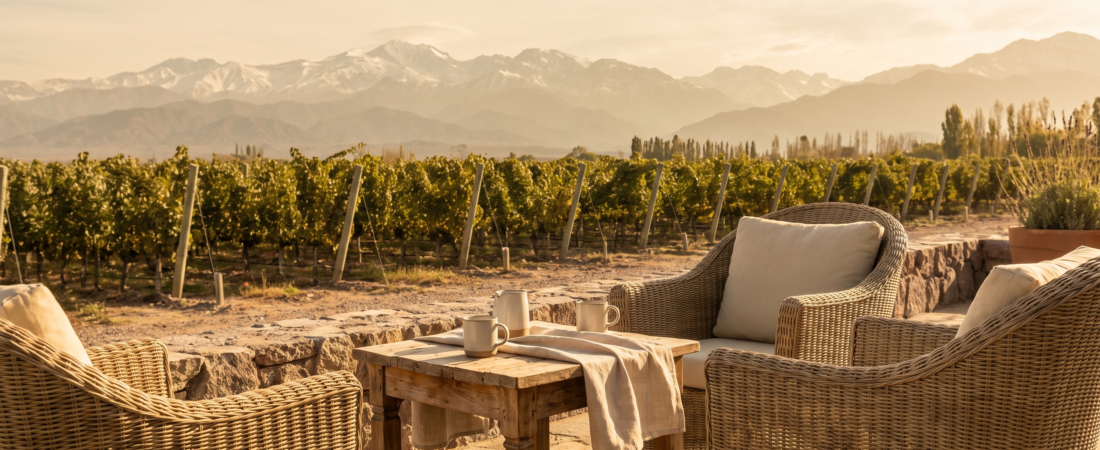
Figuring out where to stay in Mendoza is one of the first decisions that shapes the rest of a wine trip here. This isn’t one compact wine region with a single hotel strip. It’s a sprawling province, and the department you sleep in decides how far you drive each morning, how much nightlife is nearby, and how much of the trip feels like “the city” versus “the vineyards.” Here’s how the main areas compare, and which one probably fits your trip.
Mendoza City: The Easiest Base for First-Timers
Downtown Mendoza is the default choice for good reason. It’s walkable, full of parrillas and wine bars, and has the widest range of hotels, from simple guesthouses to design-forward boutique properties around Plaza Independencia. If you’re new to the region, our first-timer’s guide to wine tasting in Mendoza is worth reading before you book.
The tradeoff is distance. The closest wineries in Maipú are a short drive away, but Luján de Cuyo and especially Uco Valley are 30 to 90 minutes out, so most days involve a drive or a guided tour rather than a stroll. Mendoza City makes the most sense for shorter stays, travelers without a rental car who want tours to pick them up, or anyone who wants city life in the evening after a day among the vines.
Chacras de Coria: Small-Town Charm Near the Vineyards
Chacras de Coria is a leafy, low-key neighborhood inside the Luján de Cuyo department, built around a plaza lined with sycamore trees, cafes and a well-loved Sunday craft market. It’s quieter and greener than downtown but still has enough restaurants and small hotels to feel self-contained.
Geographically, it splits the difference: you’re noticeably closer to the wineries than if you stayed downtown, but still only about 20 to 25 minutes from the city center when you want a change of scene. It’s a popular pick for travelers who want a slower pace without fully committing to a rural estate.
Luján de Cuyo: Sleeping Among the Wineries
Luján de Cuyo is where a lot of Mendoza’s best-known wineries are actually based, so staying here means waking up among vineyards rather than driving out to them. Accommodation ranges from simple posadas to high-end wine lodges attached to working estates, some with their own restaurants and tasting rooms on site.
This is generally the strongest choice for anyone whose trip is built around wine first. For a sense of which estates cluster in this area and further afield, see our roundup of the best wineries in Mendoza. Keep in mind that dinner options can be more limited than in the city, and many properties are spread out, so a car (or a driver) is more useful here than downtown.
Uco Valley: A Slower, High-Altitude Escape
Uco Valley sits roughly an hour to an hour and a half south of Mendoza City, at meaningfully higher altitude, which is part of why its Malbecs taste different from those grown closer to the city. It’s also the area with the most dramatic Andes views, and the wine lodges here tend to lean toward longer, unhurried stays rather than one-night stopovers.
If your trip has room for two or three nights outside the city, Uco Valley is the area that will feel the most different from anywhere else in the region. We go into the sub-areas, altitude and grape varieties in detail in our Uco Valley wine guide. Just know that once you’re based here, day trips back into Mendoza City take real time, so it works best as a dedicated leg of the trip rather than a base for everything.
Maipú: A Budget-Friendly, Bike-Around Option
Maipú is the closest wine department to Mendoza City, with flat roads that make it genuinely practical to cycle between a handful of wineries, an olive oil mill and a small brewery or two in an afternoon. Accommodation here tends to be simpler and more budget-friendly than Luján de Cuyo or Uco Valley, with fewer high-end lodges and more guesthouses and mid-range hotels.
It’s a good fit for travelers who want an easy, low-cost wine day without renting a car, especially younger travelers or anyone splitting a short trip between Mendoza and other parts of Argentina.
Traveling With Family or as a Group
Larger groups and multi-generational trips tend to do better outside the city center. Luján de Cuyo and Chacras de Coria have more houses and larger suites set up for groups, and several winery lodges in Uco Valley offer multi-room villas that work out cheaper per person than booking several hotel rooms downtown. If anyone in the group isn’t drinking wine on every stop, staying somewhere with a pool or garden, rather than a purely city hotel, tends to keep everyone happier between winery visits.
Families with young kids often do well splitting the difference: a couple of nights in Mendoza City for the plaza, ice cream and easy restaurants, then a night or two at a quieter property in Chacras de Coria or Maipú with more outdoor space.
How to Decide Based on Your Trip
A simple five-night split that works for a lot of first-time visitors: two nights in Mendoza City to settle in and explore downtown, two nights in Luján de Cuyo or Chacras de Coria for winery visits within easy reach, and one night in Uco Valley if there’s time for the drive south. Shorter trips can drop the Uco Valley leg entirely and add an extra night in Luján de Cuyo instead.
If you have two or three days
Base yourself in Mendoza City or Chacras de Coria and book day tours or a driver for winery visits. Trying to relocate hotels for a short trip usually costs more time than it saves.
If you have a week or more
Split the stay: a few nights in the city or Chacras de Coria, then two or three nights in Luján de Cuyo or Uco Valley. This is the most common pattern among longer wine-focused itineraries, and it avoids backtracking. Our guide to planning a Mendoza wine trip walks through sample itineraries at different lengths.
If you don’t want to rent a car
Stay in Mendoza City or Chacras de Coria, where tours, drivers and taxis are easiest to arrange. Luján de Cuyo and Uco Valley are workable without a car, but you’ll want a driver or a lodge that offers transfers, since properties are spread out and there’s little to walk to.
Good to know
Getting around: most visitors either rent a car or book wineries and hotels that arrange transfers and tours; taxis and rideshare apps cover the city well but get patchier further into wine country.
Best time to book ahead: during the March to April harvest season (vendimia) and the Southern Hemisphere summer, rooms in Luján de Cuyo and Uco Valley fill up faster than in the city.
Typical price range: expect simple guesthouses in Maipú and the city at the lower end, with boutique hotels and winery lodges in Luján de Cuyo and Uco Valley at the higher end; rates vary a lot by season, so check ahead rather than assuming a fixed price.
Distances from Mendoza City (approximate): Maipú 15-20 minutes, Chacras de Coria/Luján de Cuyo 20-40 minutes, Uco Valley 60-90 minutes.
There’s no single right answer to where to stay in Mendoza, Argentina. It depends on how many days you have, whether wine or city life is the priority, and whether you’re driving yourself. Most travelers do best with a short list of two areas rather than trying to see everything from one hotel.
Ready to plan your Mendoza wine trip?